Third Act
The quiet return of the intermission
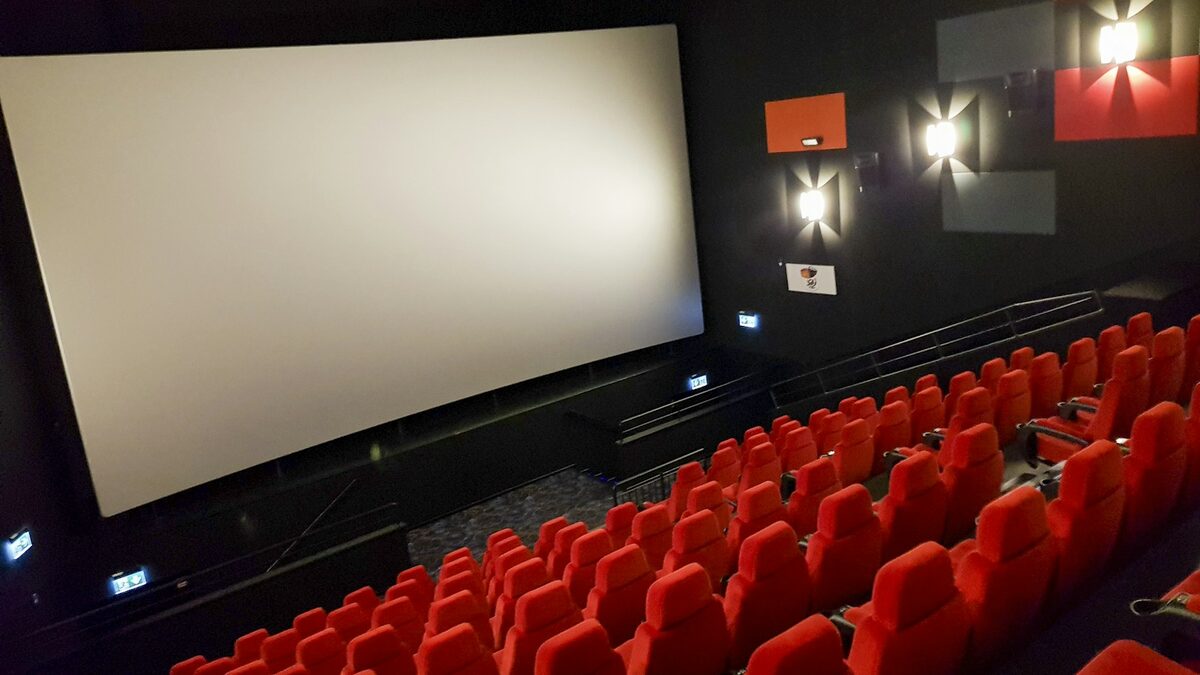
Somewhere around the two-hour-forty-minute mark of a recent screening, I watched roughly a third of the row in front of me shift in their seats within the same ninety seconds. Nobody said anything. Nobody left. But the specific, synchronized discomfort of a theater full of people whose bodies have quietly had enough is not subtle once you notice it, and lately I've started noticing it a lot.
Runtimes have been creeping up for years
This isn't an impression. Average theatrical runtimes for major studio releases have climbed steadily for the better part of a decade, driven partly by streaming-era appetite for sprawling, serialized storytelling and partly by filmmakers who've simply been given more rope. A three-hour theatrical release, once a rarity reserved for prestige epics, is now common enough that nobody blinks at the runtime listed next to a showtime anymore.
What's changed more recently is that a small number of theaters and distributors have started doing something about the obvious physical cost of that trend: they've started bringing the intermission back.
A format that never fully disappeared
Intermissions were standard practice for decades, especially for long-format releases, before falling out of fashion as theater chains optimized for turnover between screenings. A break in the middle of a film meant a longer total showtime, which meant fewer screenings per day, which meant less revenue per screen — a straightforward economic argument that mostly won.
But the format never fully vanished. Roadshow-style releases with built-in breaks have persisted at the margins, usually for the longest and most self-consciously epic releases, and a handful of independent and arthouse venues kept the option alive even when major chains abandoned it.
Why it's coming back now
A few theater chains and at least one major distributor have begun experimenting with scheduled intermissions for their longest releases this year, framing it less as nostalgia and more as a practical response to audience fatigue data they've apparently been collecting for a while. The reasoning, as one exhibitor put it to a trade publication earlier this year, is straightforward: a ten-minute break roughly doubles concession sales during a long film and meaningfully improves how audiences rate their overall experience in exit surveys, even when it means one fewer screening slot per day.
- Longer average runtimes have made physical discomfort a measurable factor in audience satisfaction surveys.
- A built-in break increases concession revenue enough to partly offset the cost of reduced screening turnover.
- Several venues report that intermissions reduce mid-film walkouts, which chains track closely as a satisfaction signal.

What a good intermission actually requires
Not every long film benefits from a break, and the venues doing this well seem to understand that the placement matters enormously. A badly placed intermission can deflate tension built over ninety minutes in a way that's hard to recover from in the second half. The exhibitors and distributors who've made this work tend to place the break at a natural structural pause — the end of an act, a scene that already functions as a pivot point — rather than at a fixed, arbitrary runtime.
This is harder than it sounds, because it means the decision has to be made film by film, in coordination with the filmmaker, rather than applied as a blanket policy. It's a reasonable guess that this is part of why the practice has spread slowly rather than all at once — it requires actual care, not just a corporate memo.
Not everyone is convinced
Not every filmmaker wants this. Several directors have pushed back publicly on the idea of a mandated break in their films, arguing that a carefully built sense of immersion is precisely what an intermission interrupts — you can't ask an audience to sit with mounting dread for two hours and then send them out into a bright, noisy lobby for concessions without losing some of what you built. That's a reasonable objection, and it's part of why none of the venues experimenting with this are applying it uniformly. The decision, at every theater we talked to, is made per release, usually in consultation with the distributor, rather than imposed as a house policy regardless of what's showing.
There's also a practical complaint from theater staff: a scheduled break in the middle of a screening means someone needs to be available to manage a lobby that briefly fills with an entire auditorium's worth of people at once, which is a different staffing problem than a normal between-screening turnover. A few venues have solved this by staggering intermissions across screens showing the same film at different start times, so the lobby crowd never peaks all at once — a small logistical fix, but one that took real trial and error to land on.
The case for making this permanent
I'd argue this is one of the more quietly humane ideas to show up in theatrical exhibition in a long time, and not only because my knees agree. A well-placed intermission gives an audience room to process what they've just watched before the film demands more of them — a kind of built-in breath that television has always had, in the form of episode breaks, and that theatrical film mostly abandoned in the name of efficiency.
If runtimes keep climbing, which every available trend suggests they will, the intermission isn't a nostalgic throwback. It's a practical accommodation for a format that's quietly been asking more of audiences' bodies than it used to, without anyone officially deciding that was acceptable. Bringing back a ten-minute break isn't a bold creative statement. It's just theaters admitting, finally, that a three-and-a-half-hour sitting is a genuinely different physical experience than a ninety-minute one, and treating their audiences accordingly.