Third Act
What Michael Mann understands about night
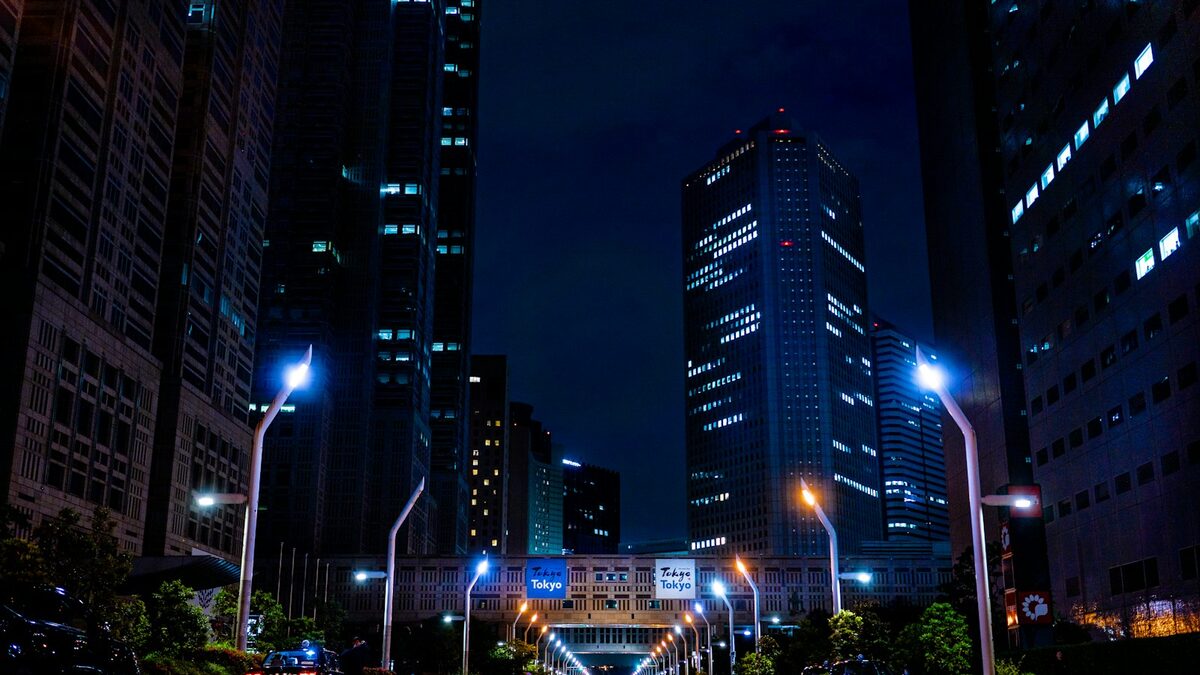
There's a shot that recurs across four decades of Michael Mann's filmography, with small variations: a man alone in a car, city lights sliding across his face through a window, a synth cue holding a single chord underneath him. It's in Thief. It's in Manhunter. It's in Heat and Collateral and Miami Vice. No other American director working in genre film has returned to the same hour of the day this often, or treated it with this much seriousness, for this long.
Night as a working condition, not a mood
Most films use night as atmosphere — a way to make a scene feel dangerous or romantic without doing much else. Mann uses it as a working condition. His characters are professionals: thieves, cops, hitmen, vice detectives, people whose jobs genuinely happen after dark, and his night cinematography is less about mood lighting than about rendering what a city actually looks like to someone doing skilled, dangerous work in it at 2 a.m. The neon isn't decoration. It's the only light his characters have to work by.
You can see this most clearly in Thief, where James Caan's professional safecracker moves through a Chicago that's rendered almost entirely in cold blues and hard-edged reflections off wet asphalt. The city isn't moody. It's precise, legible, a workspace his character has mastered the way a surgeon masters an operating room.
The digital years changed the texture, not the thesis
When Mann moved to digital cinematography in the 2000s, starting with Collateral, critics at the time focused on how different it looked — the grain was gone, the blacks were different, the whole image had a texture nobody had seen in a studio film before. What got less attention is how little the underlying idea changed. Digital sensors could pick up ambient light that film stock couldn't, and Mann used that technical capability to go further into true darkness than he'd been able to before, not to abandon the project he'd been running since Thief.
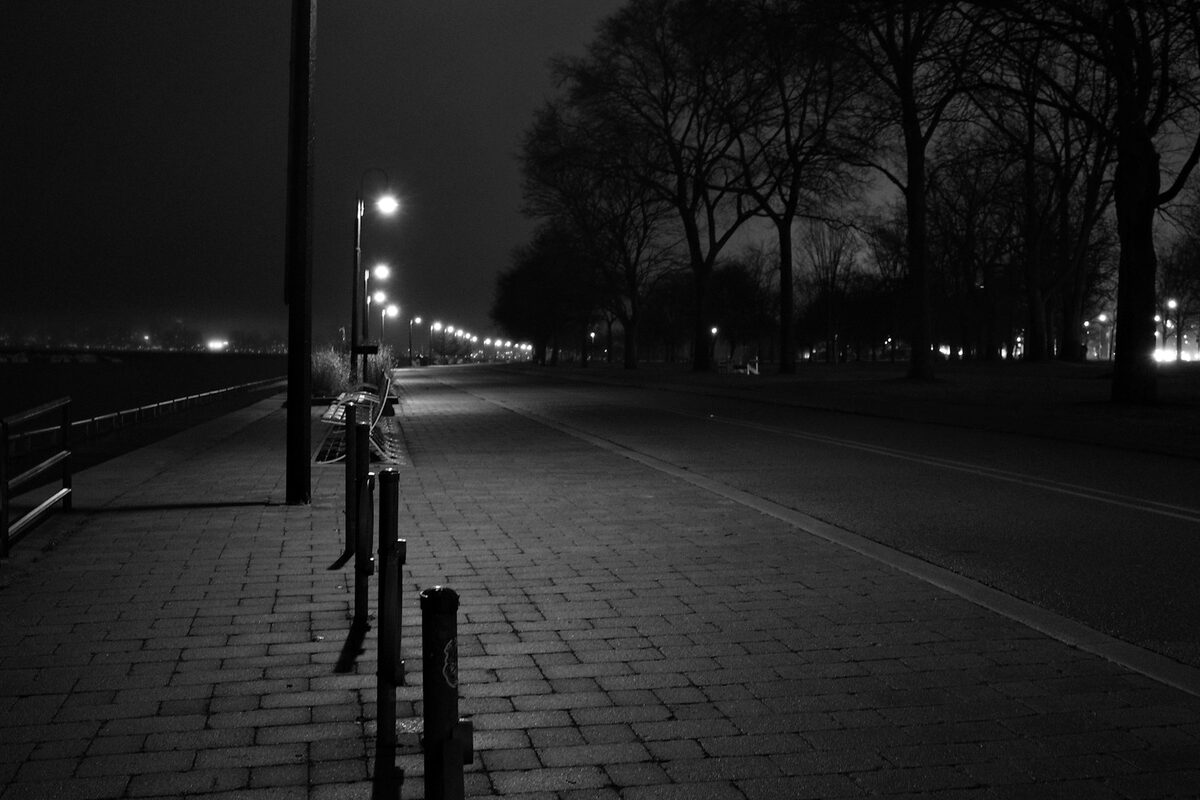
Collateral's Los Angeles at night is arguably the most accurate big-budget depiction of what a city actually looks like after midnight that American film has produced — not noir-stylized, not glamorized, just correctly, almost clinically lit, down to the sodium-orange cast of real streetlights that most cinematographers color-correct away.
Night as the great leveler
There's a thematic reason Mann keeps returning to this hour, beyond the visual opportunity. His films are almost always about two men — occasionally two women, as in parts of Miami Vice — who are mirror images of each other on opposite sides of the law, and night is where that symmetry becomes visible. The famous diner scene in Heat, between Robert De Niro's thief and Al Pacino's detective, happens in the kind of all-night restaurant that only exists because a city never fully sleeps. It's neutral ground precisely because it's the kind of place that's only open at an hour when the usual social order has loosened.
Daytime, in Mann's films, belongs to institutions — courts, precincts, families, the ordinary daylight obligations his characters are failing at. Night belongs to the work itself, stripped of everyone it affects.
Miami Vice and the limits of the thesis
Miami Vice is the film in Mann's filmography where this approach gets pushed furthest, and it's also the one that divided audiences most sharply on release. The night sequences — a boat chase lit almost entirely by running lights and the glow of a distant storm, a meeting on a dark pier that resolves into near-total silhouette — are some of the most technically audacious digital photography of their decade. They're also, for some viewers, close to illegible, trading the clarity that made Collateral's night scenes so striking for something closer to pure atmosphere.
I'd argue that's not a failure of the approach so much as Mann following his own logic to its natural endpoint. If night is a working condition rather than a mood, then a night spent on open water, far from any city grid, should look different from a night spent on a lit boulevard — darker, less legible, more genuinely disorienting. Miami Vice isn't abandoning the thesis. It's testing how far the thesis holds up once you remove the ambient city light that made it legible in the first place.
What this actually requires technically
None of this works without an enormous amount of technical control. Shooting at true night light levels, without flooding a scene with movie-light to fake the exposure, means working close to the limits of whatever camera system is being used, and it means location scouting with as much attention to practical light sources — storefronts, streetlights, the specific color temperature of a given stretch of highway — as most films give to production design.
- Mann is known for extensive night location scouting focused on existing practical light rather than rigged movie lighting.
- His climate for night scenes often uses real ambient city light as the primary source, with minimal supplemental lighting.
- The move to digital in the 2000s was driven partly by a desire to capture more of that ambient light than film stock could register.
Why it still matters
Plenty of directors have copied the aesthetic — the neon, the wet streets, the lone car shot — without the underlying commitment to accuracy that makes Mann's version of night feel earned rather than borrowed. The imitation usually reads as style. Mann's reads as research. He has spent forty years treating the hours between midnight and dawn as a subject worth taking seriously on their own terms, not as a backdrop for something else, and that's a rarer commitment than it sounds. Most filmmakers use night. Mann has spent a career trying to actually see it.